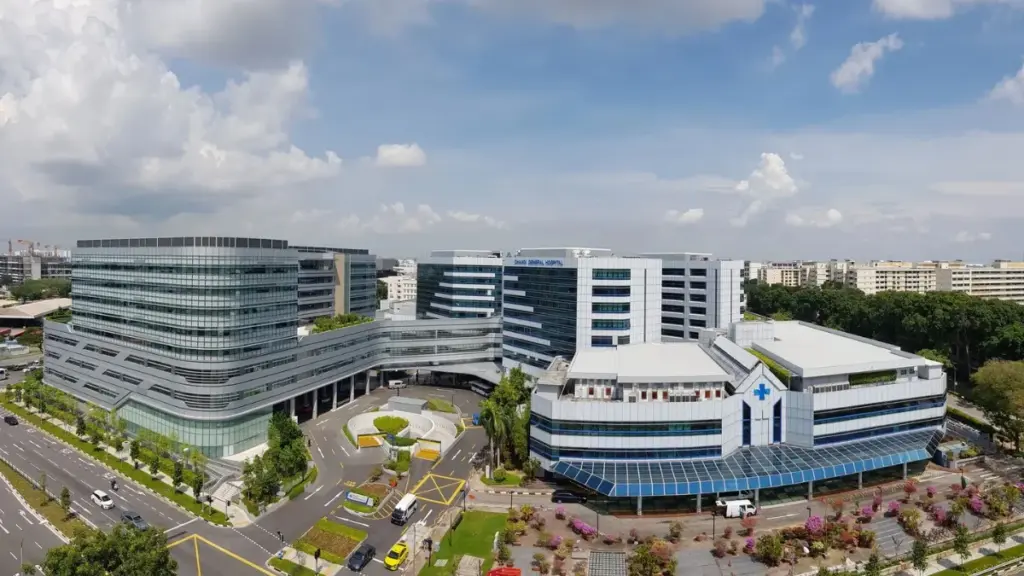
With over 1,000 beds, Changi General Hospital (CGH) is a public medical institution in eastern Singapore that has gained numerous awards and serves a populace of 1.4 million. CGH offers a wide variety of medical specialties and services under the direction of an extraordinarily certified and skilled institution of clinical professionals who constantly offer top notch treatment and health outcomes to patients. Serving the areas of the east and north-east of Singapore, Changi General Hospital is the country’s first “purpose-built” general hospital and academic medical facility.
It is the first hospital in Singapore to receive JCI accreditation for both its acute myocardial infarction program and heart failure program. It is a member of the SingHealth (Singapore Health Services) group of medical centers. Via its technologies and partnerships with groups each outside and inside the health zone, it takes a comprehensive and patient-centric technique to groups.
Diagnostic and Support Services
1. Cancer Rehabilitation Service at the Rehabilitation Medicine Center:
In this innovative “one-stop” program, newly diagnosed cancer patients scheduled for surgery are evaluated in advance and provided individualized and focused plans that include nutritional interventions, exercise prescriptions, medication adaptations, and stress reduction tools. Non-surgical cancer patients who may receive radiation or chemotherapy are now included in this service.
(a) CGH-NNI included Spine Center: Same-day clinic consultations with a neurosurgeon, orthopedic health practitioner, or rehabilitation medication doctor can be useful for sufferers with spine-associated problems. This makes comply with-up care and referral less difficult.
(b) Electrodiagnostic health facility: Neurologists and rehabilitation doctors carry out nerve conduction tests and/or needle electrode exams on patients with suspected neuromuscular issues to evaluate the situation of the muscle mass and nerves.
(c) Rehabilitation medical doctors holistically examine patients with musculoskeletal problems inside the incorporated Rehabilitation Musculoskeletal health facility (IRMC) to broaden a management approach with a purpose to limit long-time period disability.
(d) Spasticity clinic: Interventions along with botulinum toxin (Botox) injections, peripheral nerve blocks, or motor-point block injections observed by way of splint-like orthotic fittings may be beneficial for sufferers with spasticity caused by stroke, spinal twine harm, or disturbing mind damage.
(e) Urodynamics hospital: After spinal wire harm, patients’ bladder characteristic is evaluated in order that customized bladder control plans can be advocated.
2. Occupational Health Services:
CGH provides a variety of occupational health services, such as:
(a) Statutory medical examinations: Pre-placement and normal periodic medical examinations are mandated by means of workplace safety and fitness guidelines for workers exposed to specific health dangers inside the place of work. The cause of those assessments is to assist people become aware of and prevents the onset of disease.
(b) Assessment and analysis: To assure that personnel with unique medical conditions are capable of work fitness-to-work evaluations: via implementing reasonable task changes, those reviews are seeking for to assure that personnel are able to carry out their specific responsibilities with minimal hazard to their health and safety.
Clinical absence management and return-to-paintings reviews: those reviews help organizations handle employees who are absent for extended periods of time due to contamination. This makes it simpler for businesses to apprehend what an employee needs to return to work properly. Assessment is another component for a phased return to work.
Return to work program (Ministry of Manpower): The return to work program is a partnership with the Ministry of Manpower that targets to assist personnel who be afflicted by musculoskeletal illnesses or critical paintings accidents to gradually go back to their jobs as soon as medically suitable.
Workplace hazard assessments and advice: these help groups perceive ability place of business hazards and offer crucial guidance on preventive movements to guard workers from ability ailments and injuries.
Work-related incapacity opinions: These critiques are achieved for insurance claim functions for personnel who have sustained injuries or permanent illness due to exposure on the activity.
Medical input to incident/accident investigations: Occupational medical experts can analyze and refute human factors as a contributing factor in a safety or accident investigation, as well as offer medical expert opinion to prevent future recurrence.
Occupational disease diagnosis, investigation and management: Through regular screening or ad-hoc consultation, it helps workers to identify new symptoms or indicators of worsening symptoms and develop preventive actions to eliminate or control the condition.
(c) Advice:
Consultation regarding ergonomics and workplace design: workplace ergonomic interventions lessen the hazard of musculoskeletal diseases and injuries. Employers can use ergonomics software principles to higher fit offices, gadget, responsibilities, and job layout with the abilities of the operating populace.
Occupational medicine specialists can help organizations and employers reduce health and safety risks in the workplace, help employers effectively manage medical-related processes, and promote a healthy and vibrant workforce by providing advice and guidance on the implementation of health and safety programs to support the health and well-being of an organization’s workforce.
3. Medical Social Services
Psychological and social issues frequently accompany infection and disability: Our medical social employees collaborate with a multidisciplinary care team, network partners and households to take care of sufferers each inside and out of the health center.
(a) Counselling: patients with most cancers, long term incapacity, bereavement and interpersonal relationship problems can gain from this service. Health transition discussions encompass patients with chronic illnesses.
(b) Disaster intervention: For sufferers who’ve tried suicide or who have been abused by way of their spouse or spouse and children.
(c) Discharge and care planning: This consists of financial assistance, housing, placement in assisted living facilities, special device wishes, and family advocacy and mediation on behalf of patients and their families. in addition to coordinating post hospital care plans to help the patient reintegrate into his or her circle of relatives and community, this service additionally consists of referrals and connections to community aid offerings and rehabilitation centers.
(d) Psychosocial assessment: assessing the affected person’s private relationships, social support system, economic situation, coping strategies, stage of misery, knowledge of their illness, injury and remedy, in addition to their ability for adjustment and exchange.
(e) Support groups: These include patient meetings and initiatives such as stroke self-management support groups, Parkinson’s support groups, cardiac rehabilitation programs and breast cancer support groups.
(f) Training and Consultancy: By serving on the management committees of many social service organisations, the department also provides consultancy services to social work practitioners, postgraduates and graduates as well as to welfare homes and community services.